Reproductive Health and Family Planning—Complete Guide
Reproductive health and family planning focus on helping individuals and couples make safe, informed choices about pregnancy, contraception, and overall reproductive well-being. It supports healthy birth spacing, prevents unwanted pregnancies, reduces maternal and infant health risks, and empowers women and families to plan a better future.
What Is Reproductive Health?
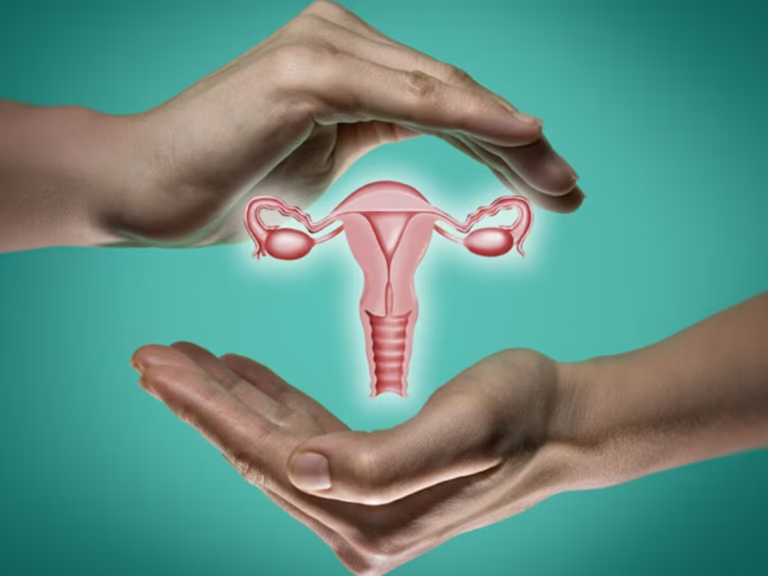
Reproductive health refers to complete physical, mental, and social well-being related to reproductive health services, functions, and care.
It does not mean only the absence of disease or illness but the ability of individuals to make safe, informed, and responsible decisions about their reproductive lives.
Key Aspects of Reproductive Health and Family Planning—Complete Guide
Physical well-being:
Healthy functioning of reproductive organs, safe pregnancy, childbirth, and prevention of infections.
Mental well-being:
Emotional well-being and freedom from stress, fear, and stigma in reproductive health care.
Social well-being:
Access to healthcare, education, equality, and the right to make personal reproductive choices.
Who Does Reproductive Health Apply To?
Reproductive health is important for everyone, including:
Adolescents:
Puberty education, menstrual health, prevention of early pregnancy.
Women:
Menstrual care, contraception, pregnancy, childbirth, menopause.
Men:
Sexual health, fertility, shared responsibility in family planning.
Why Does Reproductive Health Matter Across the Life Cycle?
- Promotes healthy growth during adolescence
- Ensures safe and planned pregnancies
- Reduces maternal and infant mortality
- Supports healthy ageing and hormonal balance
- Improves overall quality of life
Example:
A young couple chooses to plan their pregnancy responsibly by:
- Understanding their reproductive health
- Using appropriate family planning methods
- Seeking medical guidance before conception
This leads to a healthier mother, safer pregnancy, and better outcomes for the child.
What Is Family Planning?
Family planning is the process by which individuals and couples decide freely and responsibly the number of children, the spacing between births, and the timing of pregnancy through the use of safe and effective methods.

Meaning of Family Planning
- Helps people plan pregnancies according to their health, finances, and life goals
- Prevents unintended and high-risk pregnancies
- Supports informed reproductive choices
Planned vs Unplanned Pregnancies
| Planned Pregnancy | Unplanned Pregnancy |
|---|---|
| Occurs by choice | Occurs unexpectedly |
| Better maternal health | Higher health risks |
| Proper medical care | Delayed or no care |
| Emotional readiness | Stress and anxiety |
Role of Contraception in Family Planning
Contraception plays a key role by:
- Preventing unwanted pregnancies
- Allowing safe spacing between births
- Supporting maternal and child health
- Giving individuals control over reproductive decisions
Benefits of Family Planning
For Mothers
Reduces pregnancy-related complications
Prevents anemia and exhaustion
Supports physical and mental health
For Children
Better nutrition and care
Lower infant mortality
Improved growth and development
For Families
Financial stability
Better education opportunities for children
Stronger family well-being
For Society
Controlled population growth
Reduced healthcare burden
Improved economic development
Greater gender equality
Why Is Reproductive Health Important?
Reproductive Health and Family Planning
is essential for the well-being of individuals, families, and communities. It plays a crucial role in protecting lives, improving the quality of care, and supporting social and economic development.
Key Reasons Why Reproductive Health Matters
- Reduces maternal mortality:
Access to quality reproductive healthcare helps prevent pregnancy-related complications and ensures safer childbirth. - Prevents unsafe abortions:
Family planning services and education reduce unintended pregnancies, lowering the risk of unsafe abortion practices. - Improves child survival:
Healthy mothers and planned pregnancies lead to better birth outcomes, improved nutrition, and higher survival rates for infants and children. - Promotes gender equality: Reproductive health Reproductive Health and Family Planning—Complete Guide
empowers women to make informed decisions about their bodies, education, careers, and family life.
Key Statistics (Highlights)
Lower Total Fertility Rate (TFR):
Improved access to contraception leads to planned families and balanced population growth.
Reduced infant mortality:
Proper birth spacing and maternal care significantly decrease infant deaths.
Improved women’s education and employment:
Women with control over reproductive choices are more likely to pursue education and participate in the workforce.
Relationship Between Reproductive Health and Family Planning
Reproductive Health and Family Planning are closely connected and work together to improve the health and well-being of individuals and families. While reproductive health focuses on overall well-being, family planning provides practical tools to achieve safe and informed reproductive choices.
How They Work Together
- Reproductive Health and Family Planning provides education, awareness, and healthcare access
- Family planning offers methods and services to apply that knowledge
- Together, they reduce health risks, support informed decisions, and improve quality of life
This integrated approach ensures safer pregnancies, healthier children, and empowered individuals.
Types of Family Planning Methods
Family planning methods are ways to prevent or plan pregnancy safely. They help couples and individuals decide when to have children and how many children to have and maintain healthy spacing between pregnancies. These methods include temporary options like condoms, pills, and IUCDs; permanent methods like sterilization; and emergency contraception used after unprotected sex.
Temporary / Reversible Methods
- Condoms
- Oral contraceptive pills
- IUCD (Copper-T)
- Injectable contraceptives
Permanent Methods
- Female sterilization
- Male sterilization (Vasectomy)
Emergency Contraception
- Emergency pills
- When and how to use
Comparison of Contraceptive Methods
Choosing the right contraceptive method depends on effectiveness, duration of use, and whether fertility can be restored after stopping. The table below provides a clear comparison to help in informed decision-making.
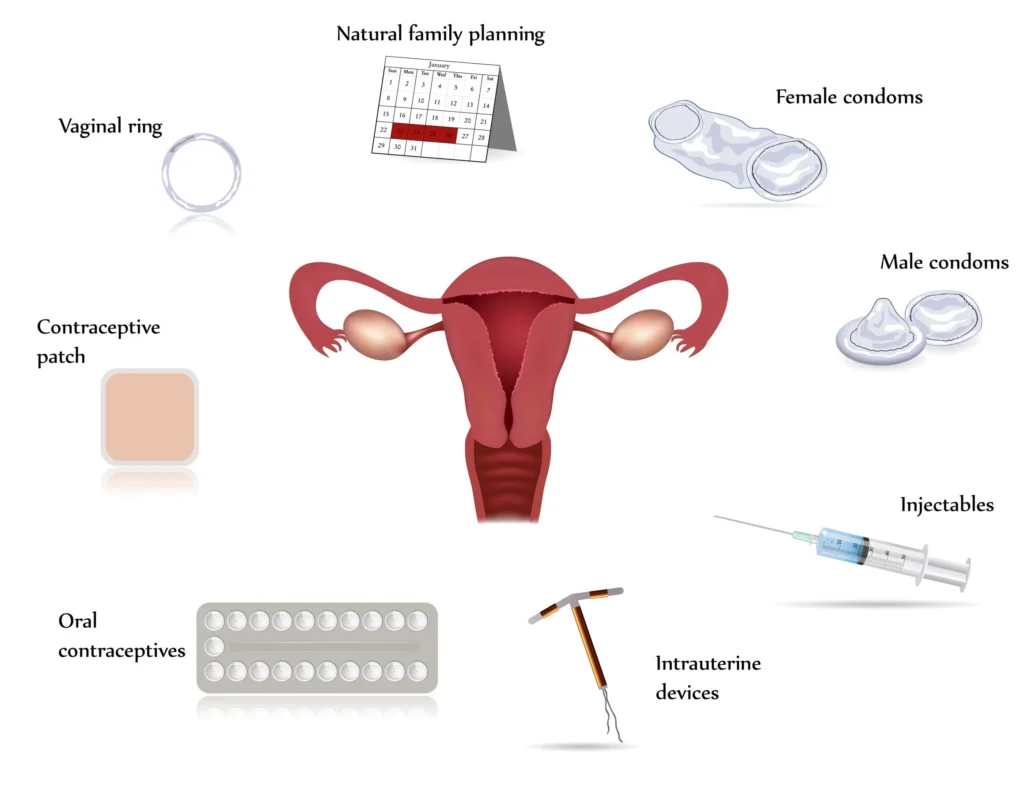
Effectiveness and Duration of Common Contraceptive Methods
| Method | Effectiveness | Duration | Reversible |
|---|---|---|---|
| Condoms | Medium | Short-term (per use) | Yes |
| Oral Contraceptive Pills | High | Daily use | Yes |
| IUCD (Copper-T) | Very High | 5–10 years | Yes |
| Sterilization | Permanent | Lifetime | No |
Key Takeaways
- Short-term methods like condoms and pills are suitable for temporary needs
- Long-acting methods like IUCDs provide long-term protection with high effectiveness
- Permanent methods are ideal for couples who have completed their family
Consulting a healthcare provider helps choose the most suitable and safe option based on individual health and future plans.
Impact of Family Planning on Women, Infants, and Society
Family planning has a positive and long-lasting impact on health, nutrition, and socio-economic development. It supports healthier families and stronger communities.
Impact on Women
- Healthy spacing between births
Allows the mother’s body to recover, reducing pregnancy-related complications. - Reduced anemia and nutritional deficiencies
Proper spacing helps restore iron and nutrient levels. - Improved physical and mental well-being
Fewer high-risk pregnancies and reduced stress.
Impact on Infants and Children
- Better nutrition for children
Mothers can provide better care and breastfeeding support. - Lower infant mortality
Planned pregnancies lead to safer deliveries and healthier newborns. - Improved growth and development
Adequate spacing ensures attention to each child’s needs.
Impact on Families and Society
- Economic stability
Families can manage expenses related to health, education, and nutrition. - Improved education outcomes
Parents can invest more in each child’s education. - Balanced population growth
Supports sustainable development and reduced pressure on resources.
Barriers to Reproductive Health and Family Planning
Despite the availability of services, many individuals and couples face challenges in accessing and using Reproductive Health and Family Planning methods. These barriers can affect health outcomes and limit informed decision-making.
Common Challenges
- Lack of awareness
Many people are unaware of available family planning methods, reproductive health services, or their benefits due to limited education and outreach. - Cultural beliefs and social norms
Traditional practices, myths, and stigma often discourage open discussion about contraception and reproductive health. - Limited access in rural areas
Remote locations may lack nearby healthcare facilities, trained providers, or a regular supply of contraceptives. - Fear of side effects
Misinformation and past experiences can create fear about contraception, leading to avoidance or discontinuation. - Gender inequality
Limited decision-making power for women and a lack of male involvement restrict access to family planning services.
Why Addressing These Barriers Matters
- Improves maternal and child health
- Prevents unintended pregnancies
- Promotes informed and voluntary choices
- Supports gender equality and empowerment
How Does Access to Birth Control Improve Family Planning?
Access to birth control is a key factor in effective family planning. When individuals and couples can easily obtain safe and reliable contraceptive methods, they are better able to make informed and responsible reproductive decisions.
Key Ways Birth Control Improves Family Planning
- Prevents unwanted pregnancies
Reliable access to contraception helps avoid unplanned pregnancies and reduces the need for unsafe abortions. - Allows informed choices
Individuals can choose if and when to have children based on health, financial stability, and personal goals. - Improves maternal health
Planned pregnancies and proper birth spacing lower the risk of pregnancy-related complications and improve overall maternal well-being. - Empowers women
Birth control enables women to pursue education, employment, and personal development while maintaining control over their reproductive health. - Overall Impact
Improved access to birth control leads to healthier families, stronger communities, and sustainable population growth.
Role of Government & National Programs
Government initiatives play a vital role in strengthening reproductive health and family planning services, especially by improving access, affordability, and awareness across communities.
National Health Mission (NHM)
The National Health Mission focuses on improving healthcare delivery with special emphasis on reproductive, maternal, newborn, child, and adolescent health.
Key Objectives Related to Reproductive Health
- Reduce maternal and infant mortality
- Promote safe pregnancy and childbirth
- Ensure universal access to reproductive healthcare services
Free Contraceptive Services
- Condoms, oral pills, IUCDs, and injectable contraceptives
- Free distribution through government hospitals and health centers
Maternal & Child Health Programs
- Antenatal and postnatal care
- Institutional deliveries
- Nutrition and immunization support
Strategies Under the Family Planning Programme
- Awareness campaigns
Community-based education programs to spread knowledge about contraception, birth spacing, and reproductive rights. - Incentives for sterilization
Financial incentives are provided to eligible beneficiaries to encourage voluntary adoption of permanent family planning methods. - ASHA worker involvement
Accredited Social Health Activists (ASHAs) educate communities, distribute contraceptives, and guide families to health facilities. - Adolescent health education
Programs focusing on menstrual health, prevention of early pregnancy, and informed reproductive choices among adolescents.
Why These Programs Matter
- Improve access in rural and underserved areas
- Reduce health inequalities
- Promote informed and voluntary family planning
- Strengthen maternal and child health outcomes
Reproductive Health Across Different Life Stages
Reproductive health needs change at different stages of life. Addressing these needs appropriately ensures better health outcomes, informed decisions, and improved quality of life.
Adolescents
Reproductive health education during adolescence lays the foundation for lifelong well-being.
- Menstrual health education
Understanding the menstrual cycle, hygiene practices, and management of menstrual disorders. - Prevention of early pregnancy
Awareness about puberty, reproductive health, and responsible behavior helps reduce teenage pregnancies and related risks.
Reproductive-Age Women
This stage focuses on fertility, pregnancy planning, and overall reproductive wellness.
- Safe motherhood
Access to antenatal care, skilled childbirth services, and postnatal support ensures healthy pregnancies and deliveries. - Contraception choices
Availability of temporary and permanent family planning methods allows women to plan and space pregnancies safely.
Post-Reproductive Age
Reproductive health care remains important even after the reproductive years.
- Menopause care
Management of symptoms such as hot flashes, mood changes, and bone health issues. - Hormonal health
Monitoring and managing hormonal changes to maintain physical and mental well-being.
Why a Life-Cycle Approach Matters
- Supports health at every age
- Prevents long-term complications
- Promotes informed and timely healthcare decisions
Infertility and Family Planning
Infertility and family planning are interconnected aspects of reproductive health. While family planning helps prevent or delay pregnancy, infertility care supports individuals and couples who are unable to conceive when they are ready.
| Aspect | Contraception | Infertility Care |
|---|---|---|
| Purpose | Prevent or delay pregnancy | Help achieve pregnancy |
| Usage Time | Before or between pregnancies | When conception is difficult |
| Methods | Condoms, pills, IUCD, sterilization | Tests, medications, assisted techniques |
| Outcome | Planned pregnancies | Improved chances of conception |
When Should Medical Help Be Sought?
Couples should consult a healthcare provider if:
- Pregnancy failure after 12 months of regular unprotected intercourse
- In women aged 35 years and above, evaluation is recommended after six months.
- There are irregular periods, hormonal issues, or known medical conditions
Role of Early Diagnosis
- Identifying hormonal or structural issues
- Preventing progression of underlying conditions
- Increasing the success rate of fertility treatments
- Reducing emotional and financial stress
Real-Life Case Studies
Case Study 1: Urban Working Couple Choosing Delayed Parenthood
An urban working couple decided to delay parenthood to focus on career growth and financial stability. After consulting a healthcare provider, they chose a temporary family planning method that suited their lifestyle.
Outcome:
- Planned pregnancy at the right time
- Improved maternal health before conception
- Reduced stress and better emotional readiness
- Healthier pregnancy and childbirth
This case shows how informed family planning supports responsible parenthood and better health outcomes.
Case Study 2: Rural Family Benefiting from Government Family Planning Services
A rural family received counseling and contraceptive support through government healthcare services and community health workers. The mother opted for a birth spacing method after her first delivery.
Outcome:
- Safe spacing between pregnancies
- Reduced maternal health complications
- Improved nutrition and care for children
- Better family economic stability
This case highlights the importance of accessible and affordable family planning services in improving maternal and child health in rural communities.
Benefits of Family Planning in Numbers
Family planning delivers measurable benefits for health, economy, and population stability. When supported by accessible services and awareness, its impact can be clearly seen in numbers and outcomes.
Key Benefits Explained
- Reduced maternal deaths
Planned and well-spaced pregnancies significantly lower the risk of pregnancy-related complications, leading to fewer maternal deaths. - Improved child survival rates
Adequate birth spacing and maternal care increase newborn survival and reduce infant and under-five mortality rates. - Economic growth
Families with planned children can invest more in education, nutrition, and healthcare, contributing to workforce participation and national economic development. - Controlled population growth
Effective family planning helps stabilize population growth, reducing pressure on resources such as healthcare, education, and employment.
Strategies to Improve Access to Reproductive Health Services
Improving access to reproductive health services requires a multi-level approach involving communities, healthcare systems, education, and government support.
Key Strategies
- Community education
Awareness programs led by healthcare workers help dispel myths, promote contraception, and encourage timely use of reproductive health services. - Telemedicine services
Virtual consultations improve access to reproductive healthcare, especially for people in remote and underserved areas, by reducing travel and cost barriers. - School-based awareness programs
Early education on reproductive health, menstrual hygiene, and responsible behavior empowers adolescents to make informed choices. - Free government healthcare
Government-funded health centers provide free or low-cost reproductive health services, including contraception, maternal care, and counseling.
Conclusion – Why Reproductive Health and Family Planning Matter
Reproductive health and family planning are essential pillars of public health that influence individuals, families, and society as a whole.
- Essential for healthy families
Planned pregnancies and access to quality reproductive healthcare lead to healthier mothers and children and stronger family well-being. - Protects women’s rights
Reproductive health services empower women to make informed decisions about their bodies, education, and life choices, ensuring dignity and equality. - Supports national development
Family planning reduces healthcare burdens, improves workforce participation, and contributes to economic stability and sustainable growth. - Ensures healthier future generations
Proper birth spacing and maternal care result in better child survival, development, and long-term health outcomes.
FAQs
What is reproductive health?
Reproductive health refers to the complete physical, mental, and social well-being related to the reproductive system. It is not just the absence of disease, but the ability to have a safe, satisfying, and responsible reproductive life.
What does family planning mean?
Family planning helps individuals and couples decide when, how many, and how often to have children by using safe and effective contraceptive methods.
Does contraception cause infertility?
No, contraception does not cause infertility. Most family planning methods are temporary and reversible, and normal fertility usually returns after stopping their use. Permanent methods are chosen only when no future pregnancies are desired.
What is the Total Fertility Rate (TFR)?
Total Fertility Rate (TFR) is the average number of children a woman is expected to have during her lifetime. A lower TFR indicates better access to family planning services.The total fertility rate
Which family planning method is best after childbirth?
The best family planning method after childbirth depends on the mother’s health, whether she is breastfeeding, and when she wants the next pregnancy. Common options include condoms, postpartum IUCD, and progestin-only pills or injectables for breastfeeding mothers. A doctor can help choose the safest method.
Why is reproductive health important for women?
Reproductive Health and Family Planning is important for women because it helps prevent maternal complications, reduces the risk of unsafe pregnancies and abortions, supports healthy menstruation, pregnancy, and menopause, and improves overall quality of life.
What is birth spacing and why is it important?
Birth spacing means keeping a gap of at least 2–3 years between pregnancies. It is important because it protects the mother’s health, reduces pregnancy risks, and ensures better care and nutrition for each child.
When should a couple seek medical advice for infertility?
A couple should consult a doctor if pregnancy does not happen after 1 year of regular unprotected intercourse, after 6 months if the woman is above 35 years, or if there are irregular periods or known health issues.
How does family planning contribute to economic development?
Family planning supports economic development by reducing healthcare costs, improving women’s education and workforce participation, and helping in population stabilization.
Are family planning services available free of cost in India?
Yes. Many family planning services and contraceptives are available free of cost at government health centers under national health programs.