
Ovarian Cancer
Ovarian cancer is a condition in which abnormal cells develop in the ovaries and grow uncontrollably, potentially spreading to other parts of the body. It is often difficult to detect early due to mild or unclear symptoms such as bloating, pelvic discomfort, and fatigue. Understanding the causes, symptoms, and treatment options can help in early diagnosis and better survival rates.
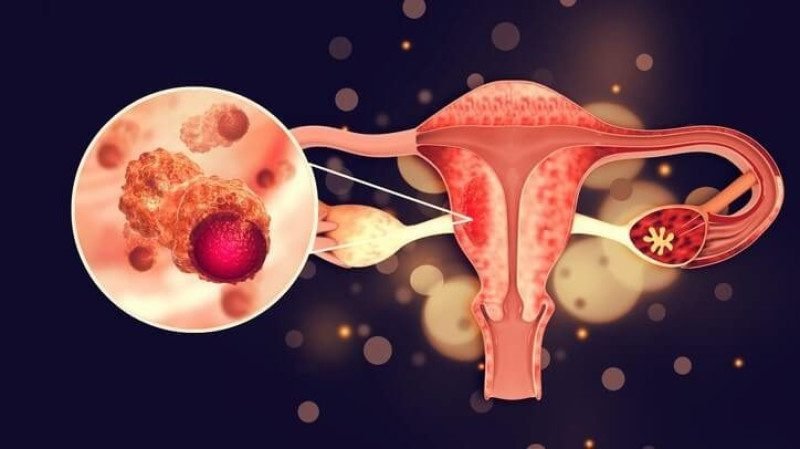
Ovarian cancer is a condition where abnormal cells grow uncontrollably in the ovaries (female reproductive organs responsible for producing eggs and hormones). These cancerous cells can spread to nearby organs if not detected early.
It is often called a “silent disease” because symptoms may be mild or mistaken for common issues like digestion problems—especially in early stages.
Who Gets Ovarian Cancer?
Ovarian cancer can affect any woman, but certain groups have a higher risk due to age, genetics, and lifestyle factors. Understanding who is more likely to develop ovarian cancer helps in early detection and prevention.
1) Age Factor
Age is one of the most important risk factors. Ovarian cancer is most commonly diagnosed in women over 40 years, and the risk increases significantly after menopause (usually after age 50). This happens because hormonal changes and cumulative cell damage over time can increase the chances of abnormal cell growth.
However, it’s important to note that ovarian cancer is not limited to older women. Certain types, like germ cell tumors, can occur in teenagers and young adults, although they are rare.
2) Postmenopausal Women
Women after menopause have an increased risk of developing ovarian cancer.. After menopause, the ovaries stop releasing eggs, but cellular changes may still occur, which can sometimes lead to cancer development.
Also, symptoms in postmenopausal women are often ignored or mistaken for aging-related issues, which may delay diagnosis.
3) Family History
If a woman has close relatives (mother, sister, or daughter) who had ovarian or breast cancer, her risk is significantly higher. This is because some cancers run in families due to inherited gene mutations.
For example:
- If one first-degree relative has ovarian cancer → risk increases
- If multiple family members are affected → risk becomes even higher
This is why doctors often recommend regular screening and genetic counseling for women with a strong family history.
4) Genetic Mutations (BRCA1 & BRCA2)
Inherited gene mutations play a major role in ovarian cancer risk. The most well-known are the BRCA1 and BRCA2 genes.
- Women with the BRCA1 mutation have up to a 40–50% lifetime risk
- Women with BRCA2 mutation have around a 10–20% risk
These genes normally help repair damaged DNA, but when mutated, they increase the chances of cancer development.
Genetic testing can help identify these risks early, especially for women with a family history of cancer.
5) Hormonal Factors
Long-term use of hormone replacement therapy (HRT), especially after menopause, may increase the risk of ovarian cancer. Estrogen exposure over many years can influence ovarian cell growth.
“Irregular changes in a woman’s cycle or hormonal balance may sometimes signal underlying conditions. Learn more in our women’s hormonal health guide.”
6) Reproductive History
Women who have never been pregnant or had children later in life may have a slightly higher risk. Ovulation (release of eggs) causes repeated minor trauma to ovarian tissue over time, which may increase cancer risk.
On the other hand, factors that reduce ovulation can lower risk:
- Pregnancy
- Breastfeeding
- Use of birth control pills
“Understanding reproductive health can help in the early detection of conditions such as ovarian cancer.
7) Lifestyle and Health Conditions
Some lifestyle and medical factors also contribute:
- Obesity linked to hormonal imbalance
- Endometriosis increases the risk of certain ovarian cancers
- Smoking is associated with specific types of ovarian cancer
8) Ethnicity and Geography
Ovarian cancer risk varies across populations. For example, women of certain ethnic backgrounds (like Ashkenazi Jewish descent) have a higher likelihood of carrying BRCA mutations.
In India, awareness is still growing, and many cases are diagnosed late due to lack of early screening and symptom recognition.
Symptoms and Causes of Ovarian Cancer
Ovarian cancer is often called a “silent disease” because its early symptoms are mild, vague, and easily mistaken for common digestive or urinary problems. However, the key difference is persistence—these symptoms occur frequently and do not go away.
Let’s understand each symptom in detail:
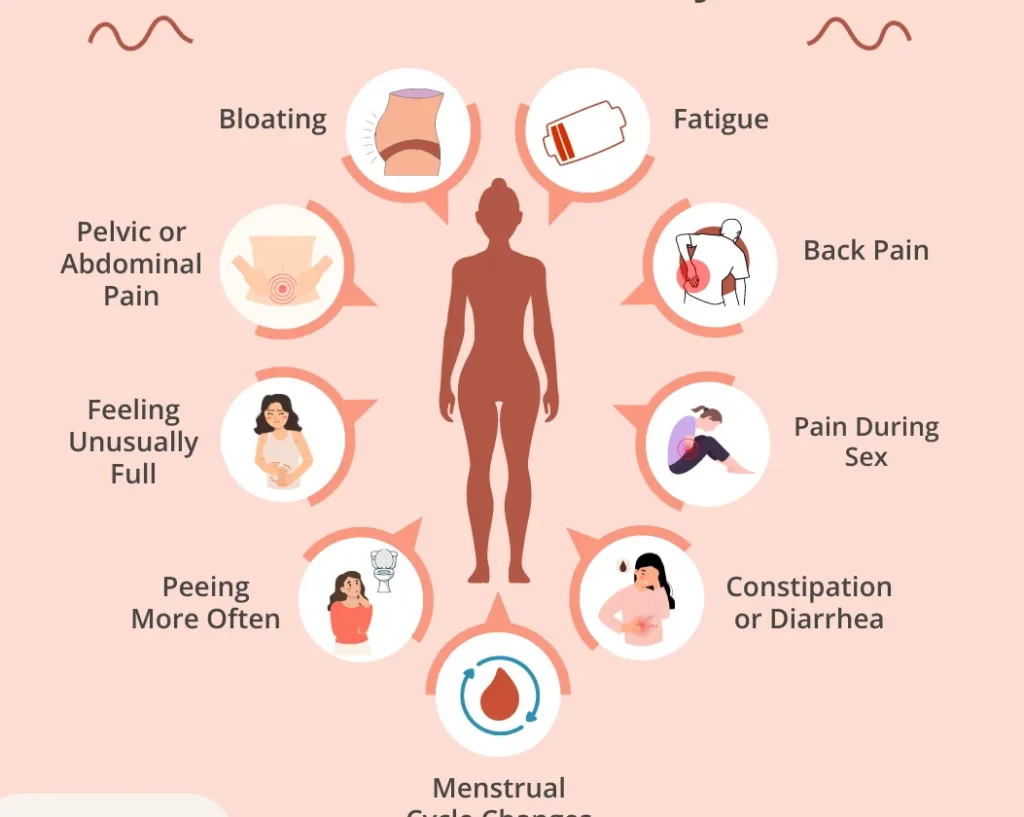
1. Bloating or Abdominal Swelling
This is one of the most common early signs. Women may feel that their stomach is constantly swollen or tight, even without eating much.
- It may feel like gas or indigestion
- Clothes may feel tighter around the waist
- Swelling may worsen as the day progresses
Unlike normal bloating, this does not improve with home remedies and persists daily.
2. Pelvic or Abdominal Pain
Persistent pain or discomfort in the lower abdomen or pelvic region is another important symptom.
- Sometimes sharp or cramp-like pain
- Can radiate to the lower back
This pain is often mistaken for menstrual cramps or digestive issues, especially in younger women.
3. Feeling Full Quickly (Loss of Appetite)
Women with ovarian cancer may feel full after eating very little food.
- Sudden loss of appetite
- Difficulty finishing normal meals
- Feeling heavy even after small portions
This happens because the tumor may press against the stomach or digestive organs.
4. Frequent Urination or Urgency
Ovarian tumors can put pressure on the bladder, leading to urinary changes.
- Frequent need to urinate
- Sudden urgency
- Feeling like the bladder is not fully empty
These symptoms are often confused with urinary infections.
5. Unexplained Weight Changes
Weight fluctuations can occur without any changes in diet or activity.
- Weight gain due to fluid buildup (ascites)
- Weight loss due to loss of appetite
Sudden or unexplained weight changes should never be ignored.
6. Fatigue
Unrelieved fatigue that persists over time should not be ignored.
- Feeling weak or low energy
- Difficulty performing daily tasks
- Lack of motivation
Cancer affects the body’s metabolism, leading to constant fatigue.
7. Changes in Bowel Habits
Ovarian cancer can affect digestion and bowel movements.
- Constipation or diarrhea
- Gas and indigestion
- Feeling of incomplete bowel movement
These symptoms are often confused with IBS or other digestive disorders.
Important Warning Sign
The frequency and duration of symptoms matter most:
- Occur almost daily
- Last for more than 2–3 weeks
- Gradually worsen over time
If this pattern is noticed, medical consultation is essential.
Types of Ovarian Cancer
Understanding the types helps in diagnosis and treatment planning.
1. Epithelial Tumors
These develop from the outer surface of the ovary.
- They account for about 90% of ovarian cancers
- Usually occurs in older women
- Often diagnosed at later stages
Subtypes include:
- Serous carcinoma
- Mucinous carcinoma
- Endometrioid carcinoma
2. Germ Cell Tumors
These start in the cells that produce eggs.
- More common in teenagers and young women
- Usually detected early
- Often highly treatable
Examples:
- Dysgerminoma
- Teratoma
3. Stromal Tumors
These develop from hormone-producing tissues of the ovary.
- Rare compared to other types
- Can produce hormones like estrogen
- Often diagnosed early due to hormonal symptoms
Prevention of Ovarian Cancer
There is no guaranteed way to completely prevent ovarian cancer, but the risk can be significantly reduced by understanding your body, managing health factors, and taking preventive steps early. Prevention mainly focuses on risk reduction and early detection.
1. Regular Health Check-ups
Routine medical check-ups play a crucial role in early detection.
- Visit a gynecologist at least once a year
- Pelvic examinations can help identify abnormalities
- Ultrasound scans may be advised if symptoms are present
- Blood tests like CA-125 can help in high-risk cases
Many women ignore mild symptoms, which leads to late diagnosis. Regular check-ups help catch warning signs early.
2. Genetic Counseling and Testing
If you have a family history of ovarian or breast cancer, genetic counseling is highly recommended.
- Helps identify mutations like BRCA1 and BRCA2
- Doctors assess your personal and family history
- Preventive strategies can be planned early
For high-risk women, doctors may suggest:
- More frequent screenings
- Preventive medications
- In some cases, preventive surgery (removal of ovaries after childbearing)
3. Use of Birth Control Pills (Under Medical Guidance)
Oral contraceptive pills have been shown to reduce the risk of ovarian cancer.
- Long-term use (5+ years) can lower risk significantly
- They reduce the number of ovulations over a lifetime
Important:
- Should only be taken after consulting a doctor
- Not suitable for everyone
4. Pregnancy and Breastfeeding
Natural life events like pregnancy and breastfeeding can reduce risk.
- Pregnancy stops ovulation temporarily
- Breastfeeding also delays ovulation
- Fewer ovulation cycles = lower risk of ovarian cell damage
5. Maintain a Healthy Lifestyle
A balanced lifestyle helps regulate hormones and overall health.
Healthy Diet
- Include fruits, vegetables, and whole grains
- Eat antioxidant-rich foods
- Limit processed and high-fat foods
Regular Exercise
- At least 30 minutes of physical activity daily
- Helps maintain a healthy weight
- Reduces hormonal imbalance
Weight Management
- Obesity is linked to increased cancer risk
- Maintaining ideal body weight is protective
7. Limit Hormone Replacement Therapy (HRT)
Long-term use of estrogen-only hormone therapy after menopause may increase risk.
- Use HRT only when necessary
- Always follow doctor’s advice
- Discuss risks and benefits before starting
8. Be Aware of Symptoms
Early detection is the most powerful tool.
- Do not ignore persistent bloating
- Watch for pelvic pain or appetite changes
- Seek medical help if symptoms last more than 2–3 weeks
Awareness + action = early diagnosis = better survival
9. Preventive Surgery (For High-Risk Women)
In some cases, especially with strong genetic risk:
- Doctors may recommend removal of ovaries and fallopian tubes
- Usually considered after completing family planning
This significantly reduces cancer risk but is only advised in specific situations.
Diagnosis and Tests for Ovarian Cancer
Accurate and early identification of ovarian cancer is important because symptoms are not always obvious. Doctors depend on multiple methods, including exams, imaging, and lab tests, for diagnosis.
How is ovarian cancer diagnosed?
No single test can reliably confirm ovarian cancer in its early stages. Instead, doctors follow a step-by-step approach:
1. Pelvic Examination
This is usually the first step in evaluation.
- The doctor physically examines the ovaries and uterus
- Checks for swelling, lumps, or abnormal masses
- May identify enlarged ovaries or fluid buildup
2. Imaging Tests
Imaging helps visualize the ovaries and detect abnormalities.
Ultrasound (Most Common Initial Test)
- Uses sound waves to create images
- Helps identify cysts, solid masses, or tumors
- Can be done as:
- Transabdominal ultrasound (over abdomen)
- Transvaginal ultrasound (more detailed view)
CT Scan (Computed Tomography)
- Provides detailed cross-sectional images
- Helps determine tumor size and spread
- Useful for staging and treatment planning
MRI Scan (In Some Cases)
- Gives highly detailed soft tissue images
- Used when diagnosis is unclear
3. Blood Tests (Tumor Markers)
CA-125 Blood Test
- Measures levels of a protein called CA-125
- Often elevated in ovarian cancer
Important Points:
- High levels don’t always mean cancer
- Some non-cancer conditions (like endometriosis) can also increase CA-125
- More useful in postmenopausal women
Other markers (in specific cases):
- HE4 (Human Epididymis Protein 4)
- AFP, hCG (for germ cell tumors)
4. Biopsy or Surgical Evaluation
This is the only definitive method to diagnose ovarian cancer.
- A sample of tissue is removed and examined under a microscope
- Usually done during surgery rather than needle biopsy
- Helps determine:
- Type of cancer
- Grade (aggressiveness)
5. Laparoscopy (Minimally Invasive Procedure)
- A slender tube equipped with a camera is gently inserted into the abdomen.
- Helps doctors directly view ovaries and surrounding organs
- Used for diagnosis and sometimes treatment
Additional Diagnostic Procedures
Doctors may also use:
- PET Scan – To detect cancer spread
- Ascitic fluid analysis – Performed when there is fluid buildup in the abdomen
- Genetic testing – For BRCA mutations
What are the stages of ovarian cancer?
Staging describes how far the cancer has spread. It helps doctors decide the best treatment plan.
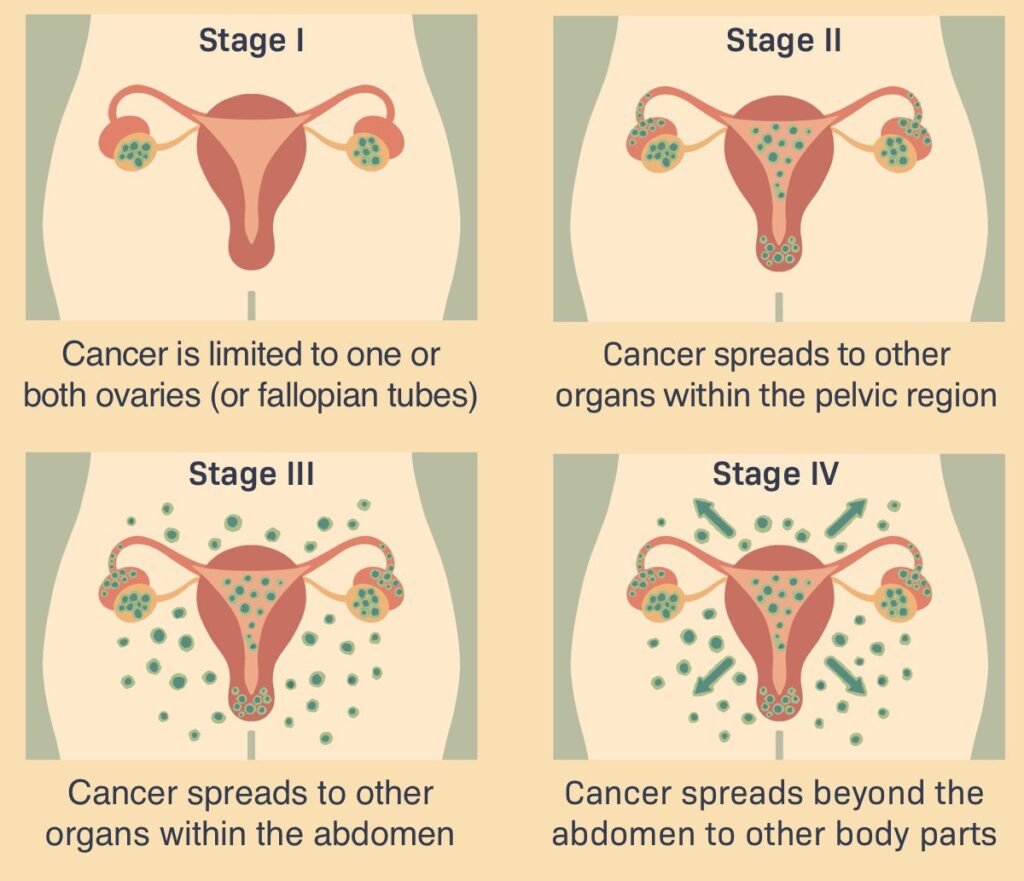
Stage 1: Cancer Limited to Ovaries
- Found in one or both ovaries
- Has not spread outside
Best prognosis if detected early
Stage 2: Spread Within Pelvis
- Cancer has spread to nearby organs
- Uterus
- Fallopian tubes
- Bladder or rectum
Stage 3: Spread to Abdomen or Lymph Nodes
- Cancer has reached:
- Abdominal lining (peritoneum)
- Lymph nodes
Most cases of ovarian cancer are identified at this stage.
Stage 4: Advanced (Distant Spread)
- Cancer has spread to distant organs, like
- Liver
- Lungs
Requires aggressive treatment
Treatment of Ovarian Cancer
Treatment for ovarian cancer is not one-size-fits-all. It depends on several important factors:
- Stage of cancer (how far it has spread)
- Type of ovarian cancer
- Patient’s age and overall health
- Whether the patient wants future fertility
1. Surgery (Primary Treatment)
Surgery is the primary and most crucial treatment, particularly in the early stages.
Types of Surgery
a) Removal of One Ovary (Early Stage)
- Only the affected ovary is removed
- Fertility can be preserved
- Suitable for young women with early-stage cancer
b) Removal of Both Ovaries and Uterus
- Called hysterectomy with bilateral salpingo-oophorectomy
- Removes:
- Both ovaries
- Fallopian tubes
- Uterus
- Common in advanced stages
c) Debulking Surgery (Cytoreductive Surgery)
- Removes as much tumor as possible
- May include parts of nearby organs if cancer has spread
- Goal: Leave minimal or no visible tumor
- This greatly improves the effectiveness of chemotherapy
Recovery After Surgery
- Hospital stay: 3–7 days
- Full recovery: 4–6 weeks
- Temporary pain, fatigue, and hormonal changes
2. Chemotherapy (Key Treatment)
Chemotherapy uses powerful drugs to kill cancer cells.
How It Works
- Targets fast-growing cancer cells
- Given:
- Through IV (intravenous drip)
- Sometimes directly into the abdomen (intraperitoneal chemo)
When is chemotherapy used?
- After surgery (to destroy remaining cancer cells)
- Before surgery (to shrink tumors)
- In advanced or recurrent cancer
Common Side Effects
- Hair loss
- Nausea and vomiting
- Fatigue
- Low immunity
- Loss of appetite
Most side effects are temporary and manageable with medication.
3. Targeted Therapy (Advanced Treatment)
Targeted therapy works by attacking specific molecules within cancer cells.
How It Helps
- Attacks cancer cells without harming normal cells
- More precise than chemotherapy
Common Types
- PARP inhibitors (for BRCA mutation patients)
- Angiogenesis inhibitors (stop blood supply to tumors)
Benefits
- Fewer side effects compared to chemotherapy
- Effective in specific genetic conditions
4. Immunotherapy (Emerging Treatment)
Immunotherapy helps the body’s immune system fight cancer.
How It Works
- Boosts immune response
- Helps the body recognize and attack cancer cells
When is it used?
- In advanced or resistant ovarian cancer
- Often combined with other treatments
5. Hormonal Therapy (In Selected Cases)
Used mainly for certain types of ovarian cancer.
- Blocks hormones that help cancer grow
- Slows tumor progression
6. Radiation Therapy (Less Common)
- Uses high-energy rays to kill cancer cells
- Rarely used as primary treatment
- Sometimes used for symptom relief (palliative care)
7. Treatment by Cancer Stage
- Uses high-energy rays to kill cancer cells
- Rarely used as primary treatment
- Sometimes used for symptom relief (palliative care)
8. Recurrence Treatment
Ovarian cancer can sometimes return after treatment.
Treatment options include:
- Repeat chemotherapy
- Targeted therapy
- Clinical trials
- Palliative care
9. Fertility Considerations
For younger women:
- Fertility-preserving surgery may be possible
- Eggs can be frozen before treatment
Always discuss fertility plans before starting treatment
FAQs – Ovarian Cancer
1. What are the earliest signs of ovarian cancer?
Early signs include persistent bloating, pelvic pain, feeling full quickly, and frequent urination. These symptoms are usually mild but occur regularly.
Is ovarian cancer curable?
Yes, ovarian cancer can be curable, especially when detected in early stages. Advanced stages can still be treated and managed effectively.
Who is at higher risk of ovarian cancer?
Women above 50, those with a family history of ovarian or breast cancer, and individuals with BRCA gene mutations are at higher risk.
How is ovarian cancer diagnosed?
Doctors use pelvic exams, ultrasound or CT scans, blood tests (CA-125), and biopsy to confirm the diagnosis.
What causes ovarian cancer?
It is caused by genetic mutations in ovarian cells. Risk increases with age, family history, hormonal factors, and certain medical conditions.
Can ovarian cancer be prevented?
There is no guaranteed prevention, but risk can be reduced through regular check-ups, a healthy lifestyle, and genetic counseling.
How fast does ovarian cancer spread?
The spread depends on the type of cancer. Certain types develop gradually, while others may progress rapidly if not identified early.
Does ovarian cancer affect young women?
Yes, although it is more common in older women, some types like germ cell tumors can affect younger women.
What are the treatment options for ovarian cancer?
Treatment includes surgery, chemotherapy, targeted therapy, and sometimes immunotherapy, depending on the stage.